Graduation with Leadership Distinction in Research

Leadership
History
Towards the end of the nineteenth century, a man named Anthony Comstock emerged into the foreground of the political scene. He was a religiously motivated man who sought to remove "vices". Some of the vices he launched a personal war against were initially tobacco, alcohol, gambling and atheism. Comstock worked his way up the political ladder by collaborating with the newly-formed Young Men's Christian Association (YMCA) and launched a legal crusade against contraceptives and information regarding sexuality. Eventually pulling members of Congress into his anti-vice campaign, in 1873, the Comstock Law was created. Described as an "Act of the Suppression of Trade in, and Circulation of, Obscene Literature and Articles of Immoral Use", the Comstock Law expanded upon earlier legislation which included a long list of "obscenities" that were to be banned in the United States. Contraceptives and information on pregnancy prevention made the top of the list. Many state governments soon followed suit and enacted legislation reinforcing the act. After the passing of the Comstock Law, figures like Margaret Sanger came. Sanger devoted her life to providing education and access to contraceptives. She established the American Birth Control League which would later be known as the Planned Parenthood Federation of America. Although she may have had somewhat of a questionable background, dabbling in eugenics and marxism, she helped educate a multitude of women during a time when they were otherwise neglected and living under the fear of prosecution if found to be seeking such information. The entirety of Comstock Law would not be overturned until 1965 with the Supreme Court case Griswold v. Connecticut. While the Comstock Law had been overturned, contraceptives were only permitted for use by married couples. It was not until the 1972 Supreme Court case Einstein v. Baird, only 44 years ago, that contraceptives were made legal for all Americans.
Even before the banning of such "obscenities", sex education information often had little basis in fact. During the 1830s, many of them discussed religion and nutrition while emphasizing the perils of masturbation. Most information at this time was only presented to young men. Eventually the National Education Association would call for sex education to be introduced in schools but districts which attempted to implement the suggestion were quickly quashed. The conversation became quiet for several decades until the rampant spread of sexually transmitted infections during World War I. Around this time, most people agreed that providing education at a younger age would be beneficial in preventing such things. Beginning with education for soldiers, schools soon followed. From the 1920s through the 1950s, sex education rapidly expanded and became a part of the curriculum, although the facuality of the information being provided was questionable. The largest resistance against sex education began in the 1960s and 1970s during the sexual revolution when some claimed the mere discussion of sex led to temptation, promiscuity, venereal disease and homosexuality. While the debate would rage on for several years, becoming a political issue, the HIV/AIDS pandemics strengthened the position of sex educators and by the 1990s, most local governments had introduced policy requiring education on the prevention of HIV/AIDS. Moving forward, some schools would develop "abstinence education" while others developed "comprehensive education". While a third of the country still continues to use abstinence education, many communities are turning towards comprehensive education.
In the United States of today, the battle for widespread access to reproductive and sexual health resources continues to wage on. While the United states has experienced a 40% drop in teen pregnancy over the past few decades, the US currently has the highest teen pregnancy rate amongst all industrialized countries. Russia ranks in second place, but a teen in the US is still 25% more likely to become pregnant than their Russian counterpart. There are around 750,000 teen pregnancies that occur each year in the United States, and 82% are unintended. Additionally, teen pregnancy disporportionately impacts minority populations, as teenaged Hispanic girls currently have the highest teen pregnancy rate of 38 pregnancies per 1,000 teen girls of childbearing age versus the national average of 24.2 per 1,000, with black teenaged girls trailing closely behind at a rate of 34.9 per 1,000.
As well as the highest teen pregnancy rate, the US has the highest rate of new sexually transmitted infections of all industrialized countries. In 2013 the Centers for Disease Control and Prevention released information collected from 2008 which showed over a million new sexually transmitted infections emerged in 2008 than in the previous two years which data was gathered on the issue. In 2000, there were 18.9 millon new infections in the US, and in 1996 there were 15 millon new infections in the US. Sexually transmitted infections can lead to a host of health problems, including infertility, ectopic pregnancy and pelvic inflammatory disease. The CDC has estimated that among young adults aged 15-24, 1 in 2 will contract an STI before age 25.

With the ever-expanding wealth of scientific ability and sexual/reproductive health literature, it is my view that much, much more can be done to expand upon current tactics being used to lower these statistics and improve the overall wellbeing of the country. My goal is to empower the American people by preventing the spread of communicable disease and improving access to reproductive health resources at both clinical and educational levels. By doing so, not only will public health improve, but young adults can work towards completing career goals, more children can be born in to stable homes, and the economic burden of reproductive health issues can be relieved.
Recommendations
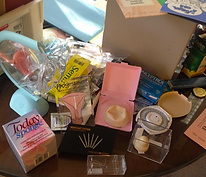
Pieces of my sexual health education kit that I have been gradually collecting items for, which includes both current and past examples of contraceptives (shown above), pamphlets
(shown below), posters, worksheets, overhead transparencies, models and diagrams.

The easiest way to prevent reproductive health issues like teen pregnancy or STI contraction is through inclusive education, thus working towards preventing any future problems. My first Key Insight, "Facets of Identity and Intersectionality", can help lay a groundwork for how to approach creating an education that suits the needs of the individual or community. By acknowledging aspects of identity that may require sensitive methods of communication, an educator or healthcare professional can tailor lessons without omitting vital content. Reaching out to community figures, like youth ministers or mentors can, assist in providing effective communication while being culturally mindful. Keep in mind that sex education cannot be "one size fits all". While not everyone is receptive to the sometimes taboo topic of sex education, that does not mean that they should be left out from the conversation. During the SC Campaign's Summer Institute, I was able to talk with several educators in the South Carolina area that each had different obstacles to providing complete information. In classrooms with students from varying backgrounds, create an open environment for non-judgemental discussion. Utilizing my "Identifying Blind Spots" Key Insight, an educator or health professional can identify any previously overlooked portions of the population that may not be receiving equal attention. In doing so they can give specialized renewed attention to the needs of that group and work towards improving their situation, rather than assuming tactics initiated to help the general population are making their way equally into all populations. Applying concepts practically, as I mentioned in my third Key Insight, can help identify particular issues that may be impacting a particular group moreso than others, whether it be a particular STI or even an increased rate of sexual assault. Using social science concepts to work towards developing hands-on methods of education for a particular community can create a much larger impact.
Making resources more accessible is vital. After hearing Vilissa speak on the challenges disabled women are often faced with and listening to the obstacles women around me have encountered, I believe it is vital to take into account the fact that reproductive health resources may not be equally attainable for all while understanding that different parts of their identity can impact this. Each one of my Key Insights can be utilized here. Identifying groups that may have particular setbacks, like those of low income level, members of the disabled community, or living far from clinics and simply asking them for suggestions for improvement can help show who needs improved accessibility and how to go about achieving it. For some communities that are already suffering with larger issues like hunger and violence, reproductive health may not be a top priority, but it is still vital for them to be able to access it. In some cases, working with community, local, state or federal organizations can be necessary to draw funding to the cause. After attending several workshops discussing both accessibility and community mobilization, I believe that using concepts that take multiple variables into account can help decide where funds or resources must be allocated within the population all while having the support of the community.
Place fact higher than opinon. As the topic of reproductive health can be a sensitive one, it should be expected than many people will have varying viewpoints on the issue. When educating or providing clinical care, personal opinion should be removed from the matter and conversation should revolve around scientific fact. There is already a plethora of incorrect or biased information existing throughout communities, schools and the internet, so in an effort to combat this, all proposed methods of working with others should have a basis in scientific fact outside of beliefs. Even when moving forwards I may not personally agree with how an individual or community is handling an issue, but my opinion is not relevant to another person's life. By respecting a person's differences and simply providing fact, I believe communication can become more effective and my original goal of improving their health can still be obtained.
Implementation
Reproductive health can be an uncomfortable topic for many and is often not discussed openly. In my own life I can remember many misleading rumors spreading through my middle school. It is also an intimidatingly broad subject which might not be fully explained in a few class periods or talks with parents. With this being the case, adolescents and young adults often turn to the internet for more information that may or may not be correct. One of the most effective ways of communication in today's times is through social media. So, in an effort to make use of the best means of contributing to the proliferation of accurate information, I have started an Instagram dedicated to passing on factual, non-judgemental knowledge in regard to reproductive health. Instagram is one of the top social media websites currently and offers the capability of seaching through hashtags while giving a visual image of the subject matter. Through this method of outreach I hope to help contribute to the accessibility of reproductive and sexual health information during the time which I remain expanding my education.
While I am still several years away from being able to implement most suggestions at a professional level, I have been able to meet with many professionals within the field of reproductive health that have helped lead me in the right direction. I will also be attending the Southern Campaign for Equality's LGBT in the South Conference on March 18-20 to gather even more information on how to effectively work with each population. Combined with personal, academic and networking experiences in both rural and metropolitan areas I believe that I have gained an understanding of the situation of reproductive health in different settings. Below this section I have compiled a list of specific suggestions expanding upon the Recommendations I listed above. These suggestions integrate the knowledge I have gained from literature, personal experiences, professional settings and academia. I hope to one day have these suggestions be the cornerstone of the method in which I carry out my career and work hands-on with patients and the surrounding community.
Implementing Improved Education:
-
Gather information on the reproductive health issues effecting each community.
-
Identify what areas or groups are significantly impacted by reproductive health issues. For example, if a particular district or neighborhood seems to have a higher rate of teen pregnancy than other districts in the area, this would be a good example of where to target attention.
-
Develop an inclusive sex eduation curriculum. Since there is no community that is immune to reproductive health issues, this must be inclusive of the needs of everyone, regardless of age, gender, race, sexual orientation, religion, education level, location, or physical disability.
-
Create methods that are easily understood. Avoid using scientific language and create educational methods that can be used for people of all learning styles, using physical models, writing, reading, and conversation.
-
Make a comfortable environment for open dialogue. Allow people to ask questions and do not insert opinion into giving answers. Giving everyone an environment that encourages them to ask any questions they may have can prevent engagement in risky behavior later on.
-
Reach out to the community, including faith leaders, youth mentors, parents and other figures. After developing an understanding of individual needs, having people from the community collaborate with you can help break down barriers and increase receptiveness.
-
Provide references. Gather pieces of information that can be taken with the person, like pamplets, posters or flyers. Suggest online resources for further reading.
Implementing Improved Accessibility and Effectiveness:
-
Anticipate the needs of others. This should be done at all times.
-
Make locations of clinics and other resources known. Promote services and spread information throughout the community on where resources can be found. People cannot get help if they do not know where it is. Some people may not have access to social media, so several avenues of promotion should be used to reach everyone.
-
Respect privacy of patients. Keep staff fluent with HIPAA and hold any staff violating it accountable. In some small town areas, people who need help do not seek it because they are concerned that staff members will discuss private information with other people in the community.
-
Consider providing transportation for people who may not live immediately in the area or may not have access to a car or bus route.
-
Ensure that the facility is equipped for all people, including members of the disabled community or those who do not speak English. Using ramps, lifts, braille signage and information, and interpreters.
-
Maintain realistic hours and appointment scheduling. Giving each patient adequate time to talk to a healthcare provider can ensure that all needs of the patient are met and gives the provider time to create an individualized care plan.
-
Dispel rumors or incorrect information. One example of a rumor would be that certain contraceptive methods can only be used by women who have previously had children when often this is not the case.
-
Tailor care plans to individual needs and ability, and avoid using a "one-sized fits all" approach to reproductive health. For example, members of the LGBT* community may not be able to use the same prevention methods as a heterosexual person, they are still capable of getting STIs or encountering other reproductive health issues.
-
Respect the patients wishes. Do not deny care based on personal opinon. Understand that they are the ultimate authority of their own body.
-
Corroborate with local agencies and organizations like domestic violence shelters or child advocacy centers.
-
Create a safe and welcoming environment that encourages people of all identities to seek any care they may need. Avoid displaying items that could be misinterpreted or give a biased first impression.
-
Develop ways to make care affordable. Seek funding or grants from all avenues and work with patients on options like payment plans or calculating patient cost on an income-based sliding scale.
Evaluating Effectiveness of Plans
With my Instagram and social media endeavors I plan to judge my success by feedback of followers and the degree to which the information that I post is able to spread. Luckily, when working in the field of public health, scientifc data can help show the effectiveness of efforts implemented. Analyzing reproductive health related data collected at the government level can help evaluate if one's attempts have succeeded, including STI contraction rates, teen/unplanned pregnancy rates and amount of population utilizing contraceptive methods. Encourage patients and students to participate in surveys and provide feedback on ways to improve, as the entire point of undertaking plans such as these is to help the public. Allow efforts to be observed by any person, organization or institution as everyone can provide valuable input that could be helpful, especially professionals within the field. I do not know if there will ever be a point where I can say my plan has succeeded because it is my intention to allow it to adapt to the changing needs of the population. Reproductive health is not necessarily a finite problem that will one day be solved, it will always continue to be vital to examine.